
How to ensure the vial capping process complies with aseptic manufacturing regulations?
Context
In aseptic manufacturing, components such as stoppers, caps, syringes, piston rods, vials, and other pharmaceutical consumables must be automatically fed and presented for downstream filling, stoppering, capping, or crimping operations.
Production environments must comply with strict hygienic and regulatory requirements including GMP Annex 1 and ISO 5 cleanroom standards.
Challenge
Traditional feeding technologies often struggle to meet sterility requirements while maintaining flexibility and throughput. Pharmaceutical production increasingly requires small batches, frequent format changes, and automated handling with minimal human intervention. Components must be gently singulated and oriented without generating particles or increasing contamination risks.
In addition, feeding systems must withstand aggressive cleaning and decontamination processes, including hydrogen peroxide (H₂O₂), while remaining compatible with isolators and RTP (Rapid Transfer Port) integration.
Reliable, clean, and flexible feeding is therefore essential to ensure sterility assurance, process safety, and high production efficiency in regulated pharmaceutical environments.
Solution
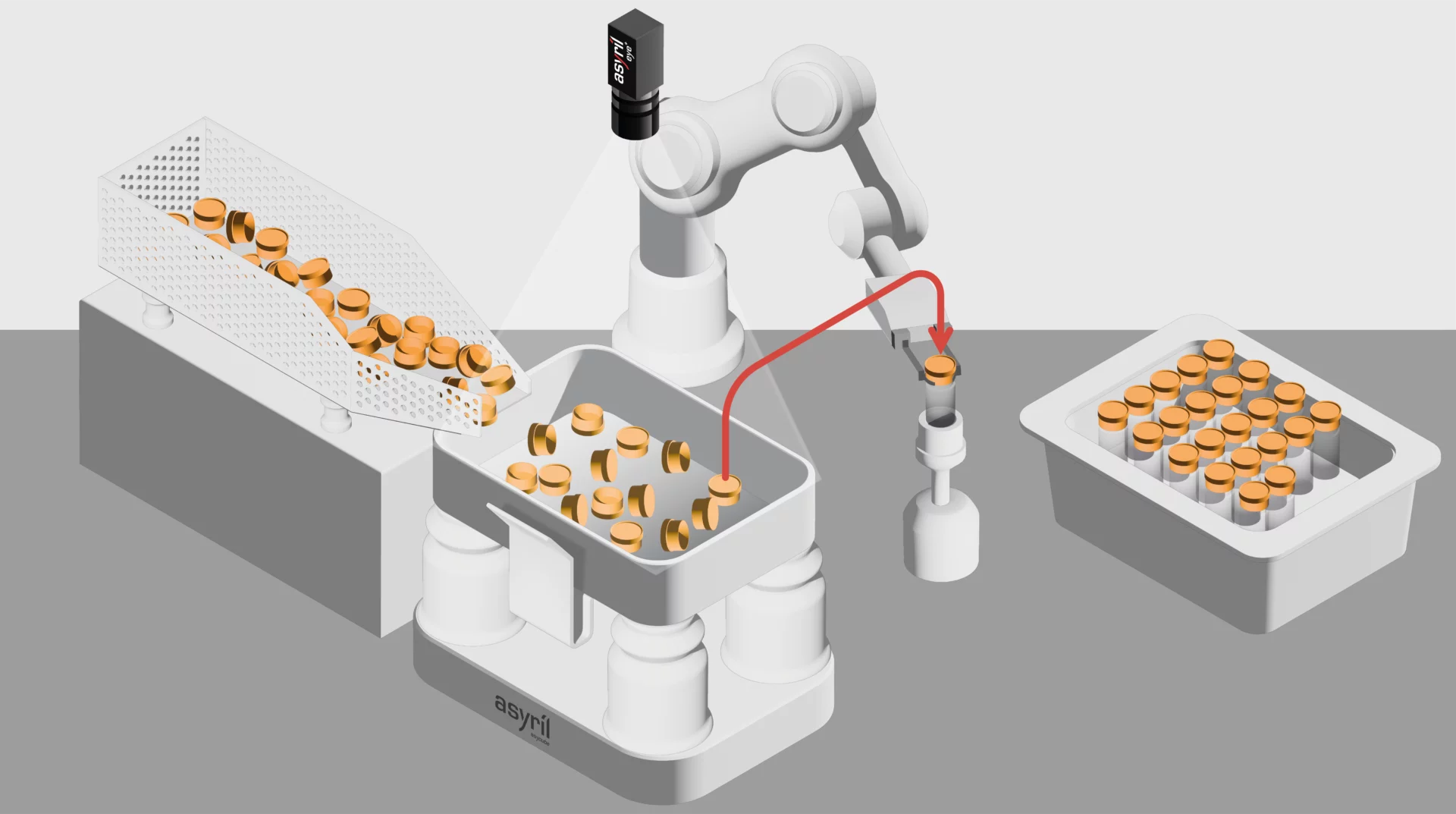
Asyril’s flexible feeding solutions automate the handling and presentation of pharmaceutical components for downstream filling, stoppering, capping, and crimping operations.
Powered by Asycube Clean and EYE+, the solution delivers clean, reliable, and flexible feeding while supporting aseptic manufacturing requirements.
Manufacturers benefit from reduced manual intervention, improved sterility assurance, and efficient production across multiple product formats.